Buying guide · Certification
How to Read a Gemstone Certificate
A laboratory report is only useful if you know what to look for. Here is how to read species, origin, treatment and the small print.
September 27, 2026 · 2 daqiiqo akhris · SOMSTONE
Maqaalkan hadda waxaa lagu heli karaa Ingiriisi kaliya.
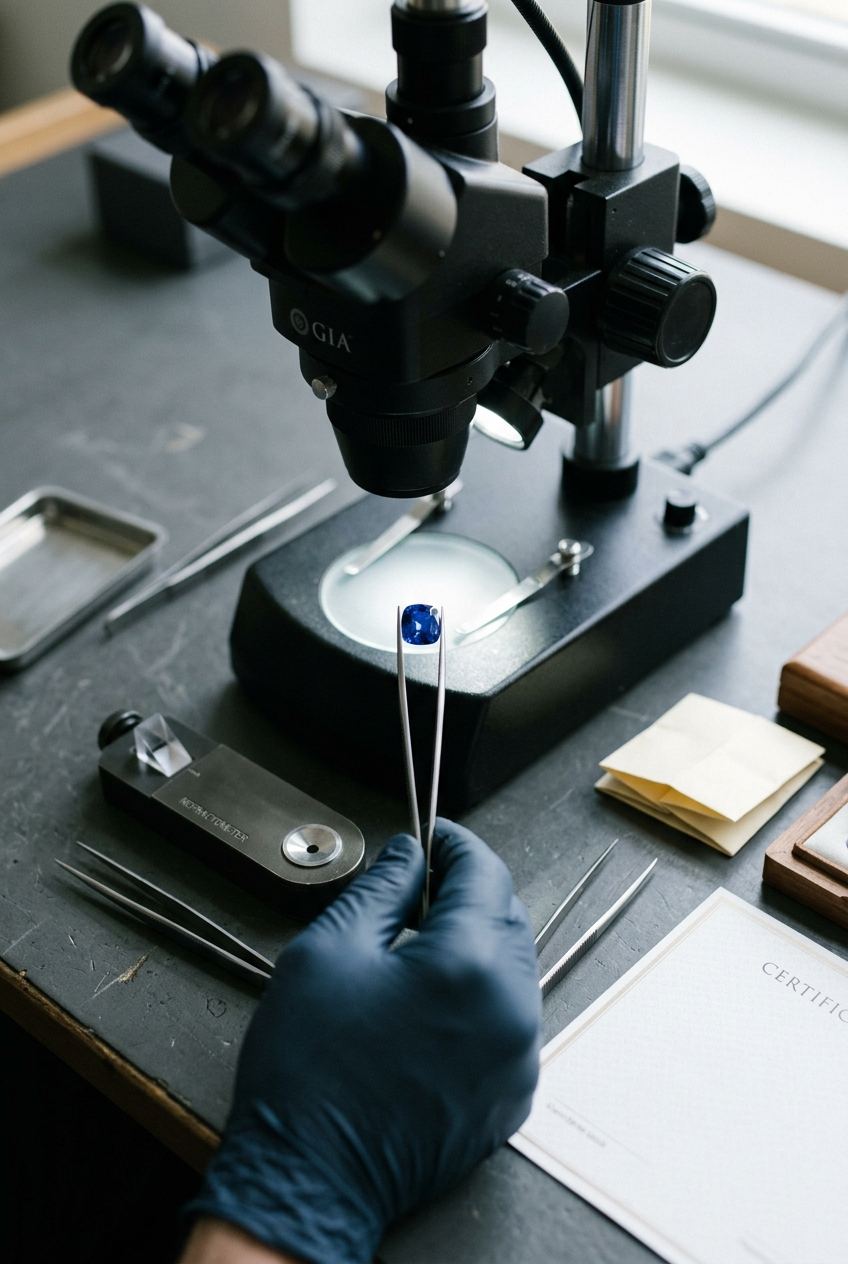
A gemstone certificate is a laboratory's considered opinion about a stone. It is not a valuation and not a guarantee of price — but read correctly, it tells you almost everything that matters.
The five lines that count
- Species and variety — for example corundum, variety ruby. This confirms the stone is what it is claimed to be.
- Weight and measurements — check them against the stone in front of you. A mismatch is a red flag.
- Colour description — laboratories use standardised terms. "Pigeon's blood" or "royal blue" carry weight only when issued by a recognised lab.
- Treatment — the most important line. No indications of heating commands a premium; indications of heating is normal for much sapphire and ruby; filled fissures or diffusion change the value category entirely.
- Origin — an opinion based on inclusions and trace chemistry. Reputable labs say so plainly and will decline to state an origin when the evidence is unclear.
Questions to ask
- Is the laboratory independent and internationally recognised?
- Is the report recent? Treatments can be applied after a report is issued.
- Does the report number verify on the laboratory's own website?
How SOMSTONE handles it
Every stone we present is inspected in-house and documented. For significant purchases we arrange third-party laboratory reports before you commit, and we tell you plainly what the report says — including anything that might lower the price.
Nala hadal
Ma raadinaysaa dhagax gaar ah ama aragti suuq? Su'aal kasta waxaan akhrinaa.
Bilow wada-hadal